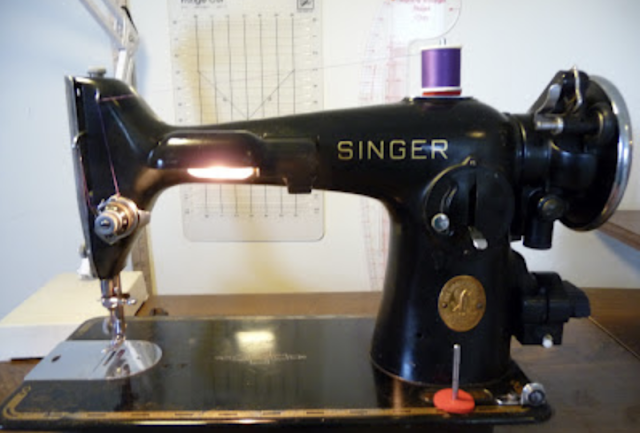
Here is an interesting evolutionary path of one branch of Singer sewing machines. It might be fun to follow along and see the common threads that connected them (no pun intended!)
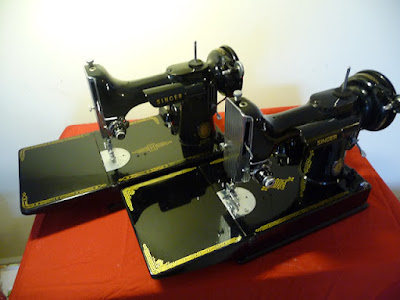
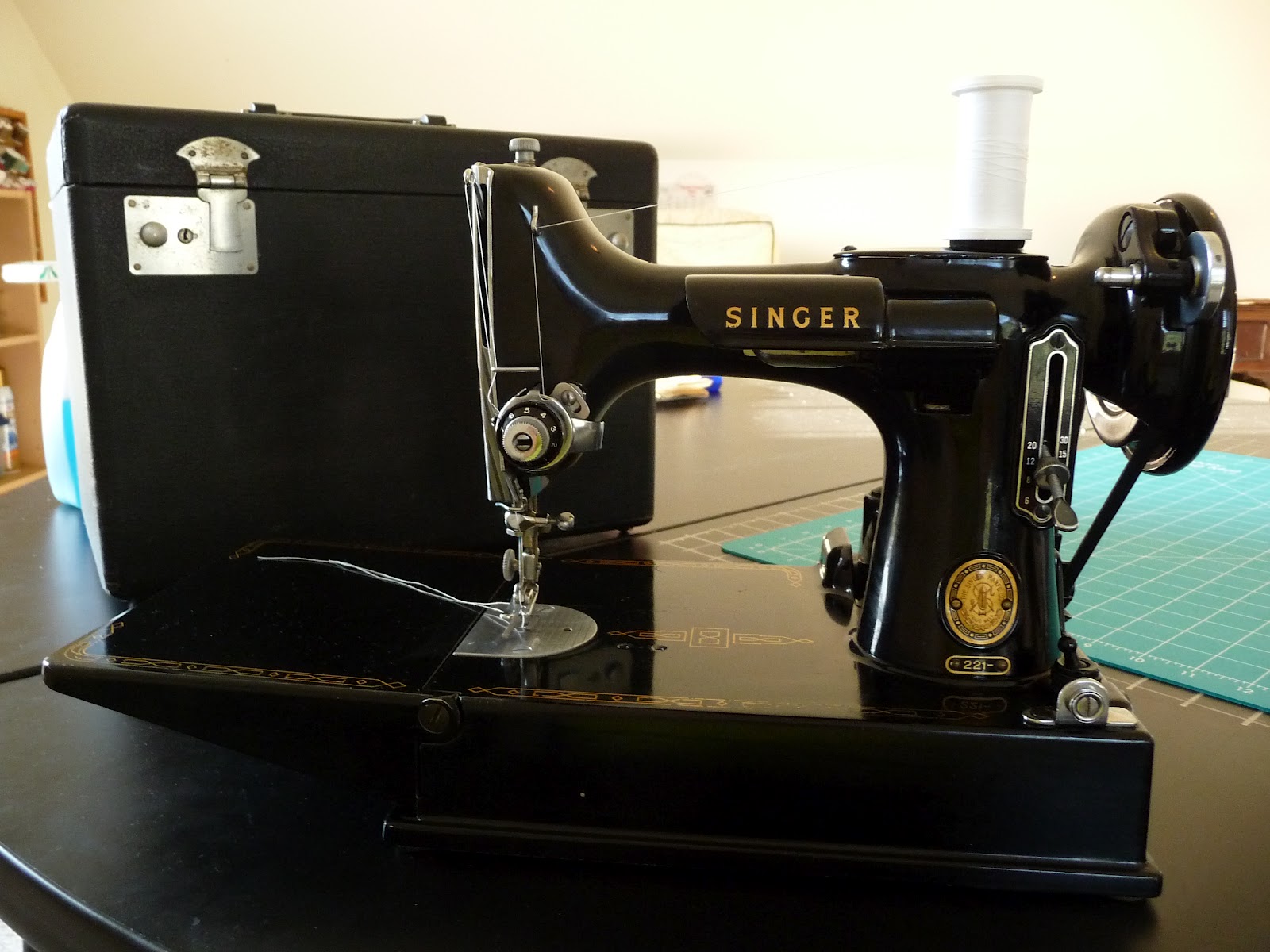
Everyone knows the 221/222 Featherweights which debuted in the 1930s, reaching peak popularity in the 1950s.

Besides the portable size, these machines had a few features that elevated them from the earlier Singer models - they had an aluminum body, a flip up extension bed, and a vertical Class 221 bobbin with a full rotary hook. This made them lightweight, compact, and smooth sewing…in that order. Then ran on an external motor and belt.
Then a new model hit the scene in the 1950s, which incorporated some of these features but then added an important new one. This was the 301 - a full size portable machine, with an aluminum body, Class 221 bobbin/rotary hook, and a flip up extension bed like the 221. But what made it stand apart was the revolutionary new “slant needle” design. And it had a direct drive, no belt. Yes, this is the first of a long line of slant shank machines, it all started with this one.
 |
| Singer 301 |
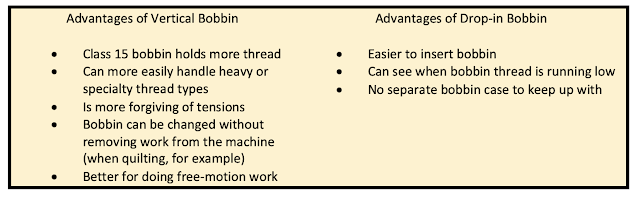
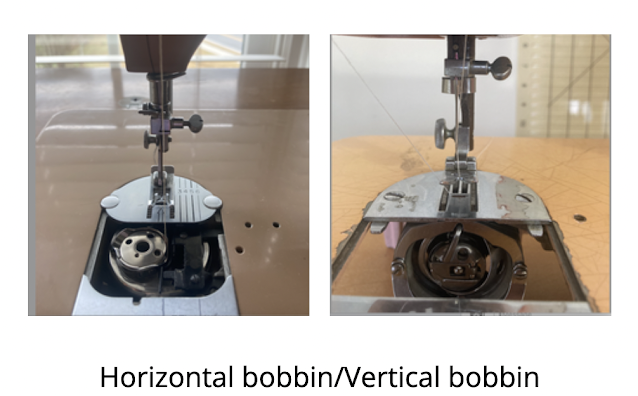
The slant shank is proprietary to Singer and was intended to give better visibility as you’re sewing. It proved to be so popular that Singer then launched a line of “Slant-O-Matics” with the flagship machine being the 401. (There are some other variations in 400 SOM series, but I’ll focus on this one.) Now, however, they went to a Class 66 horizontal drop-in bobbin, but it was still a full rotary hook because this was the TOL series of the day.
 |
| Singer 401 But Singer couldn't leave well enough alone, and thus began the gradual decline towards what we know today as the "Touch & Sew." It all began with the changes to the bobbin winder system. First, they launched a new generation of Slant-O-Matics, which were the 500 machines (known as the Rocketeers - 500/503.). They added some styling features which reflected the mid-century "space age" aesthetic, and then attempted to improve the design with a bobbin winder located on top of the machine and hidden under a hinged lid which also served as a cam cover. Without going into detail, suffice it to say that this was NOT an improvement for a number of reasons. The machine looks cool, but suffers from a case of "Function Follows Form" when it should be the other way around. |
 |
| Singer 503 |
Which brings us to the 600 series in this line. Like the 301, which bridged the low shank straight stitchers and the slant shank zigzaggers*, the 600 was a pivotal model. It is both the LAST Slant-O-Matic and the FIRST Touch & Sew which makes it rather unique.
 |
| Singer 600e Touch & Sew on left/Singer 600 Slant-O-Matic on right Again, the main change was with the bobbin winder - Singer was DETERMINED to hide that bobbin winder! And now they had an entirely new concept: the "wind in place" bobbin. To this day the bobbin winder gets mixed reviews because it works GREAT until it doesn't. (This machine also did chain stitching, a feature already available on some of the German 400 models.) While the 600 was called a Slant-O-Matic, the 600e (which had one slight change in where the button was located for the bobbin winder) was rebranded as a Touch & Sew - and thus launched a new line for Singer in the early-mid 1960s. And here is where this particular branch of the Singer family tree began to devolve. While the 600/e was mechanically identical to the 401 - a well built machine with all metal gears and direct drive - it wasn't long after this that those steel gears were replaced with nylon. Cheaper, lighter, and theoretically "smoother," but not nearly as durable. Once the 700 generation of these machines was introduced, the Touch & Sew that people love to hate was born. These are the machines with the bad reputation and the ones which give a bad name to ALL of them. |
 |
| Singer 750 This is what those gears look like today - even on the most well-maintained machines - and this is why most VSM enthusiasts shun the Touch & Sews. *An oddball machine was the Singer 404 which was a Slant-O-Matic straight stitcher (also the 604 which was the Touch & Sew straight stitcher.). Neither of these could match the ORIGINAL slant shank straight stitcher which was the 301. |